Across the life of the transaction.
The same record serves the deal from the first mandate to final payment: stages, execution, monitoring and audit.
Dates and notices, read from the documents.
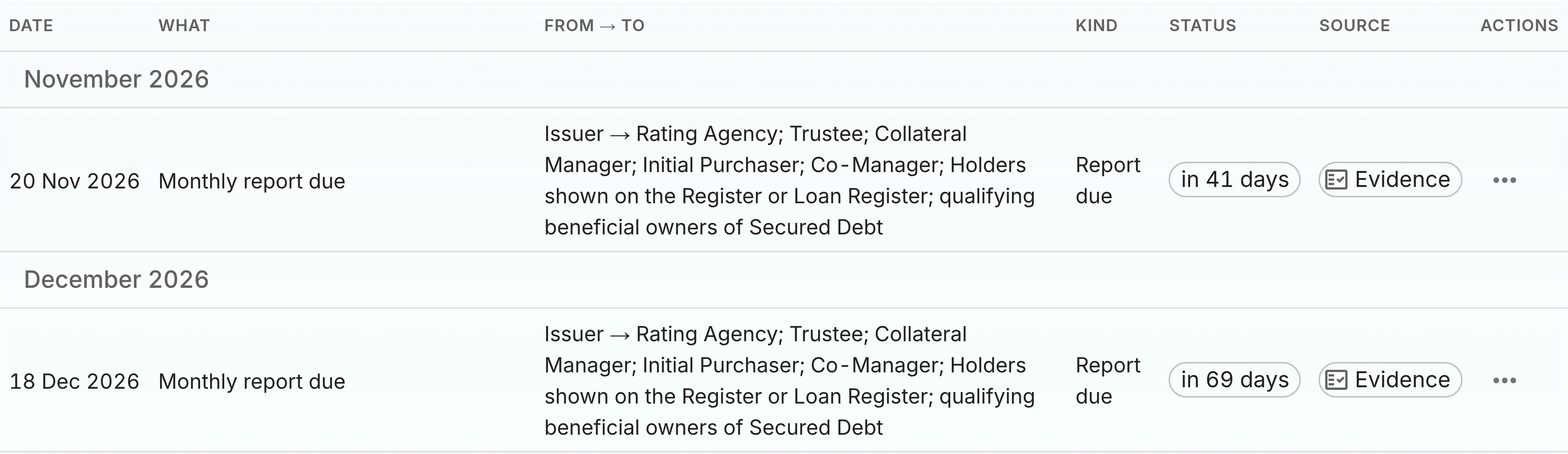
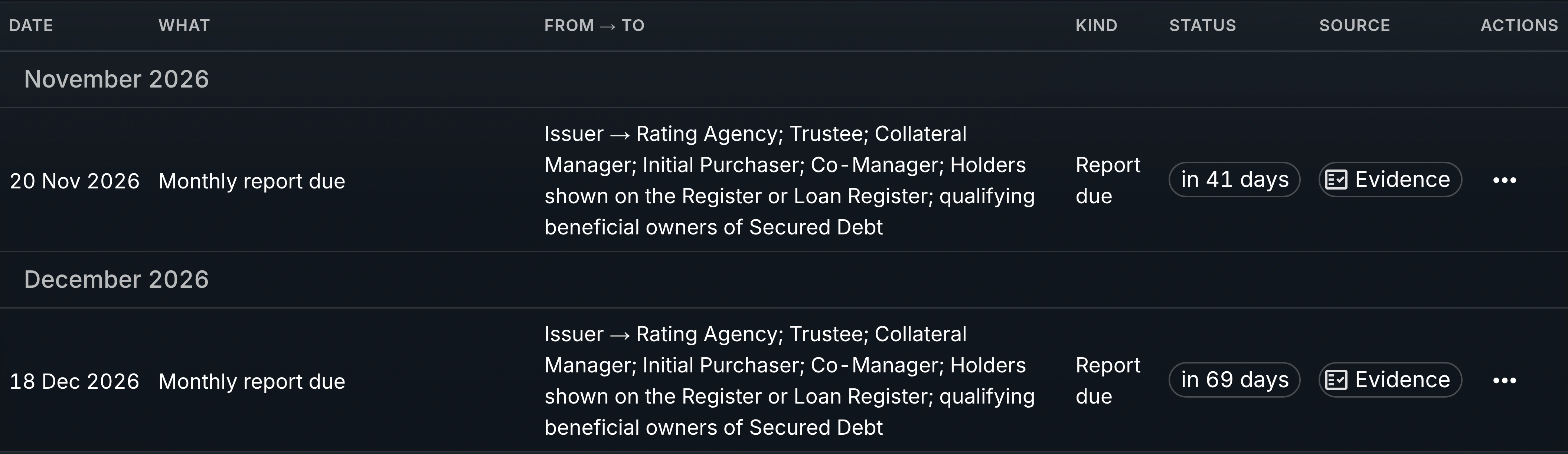
Payment dates, determination dates, notice periods and deadlines are read from the indenture and laid out across the life of the deal, each with its section.
Know where the deal stands.
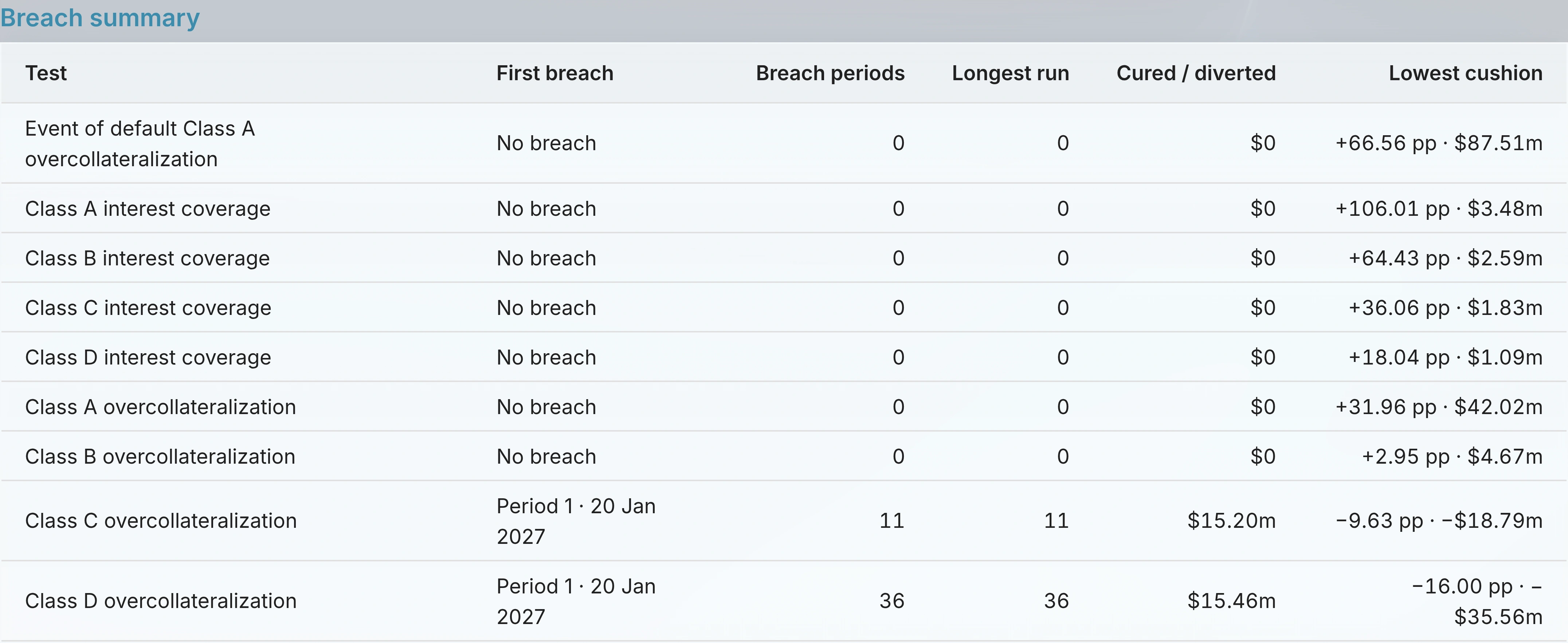
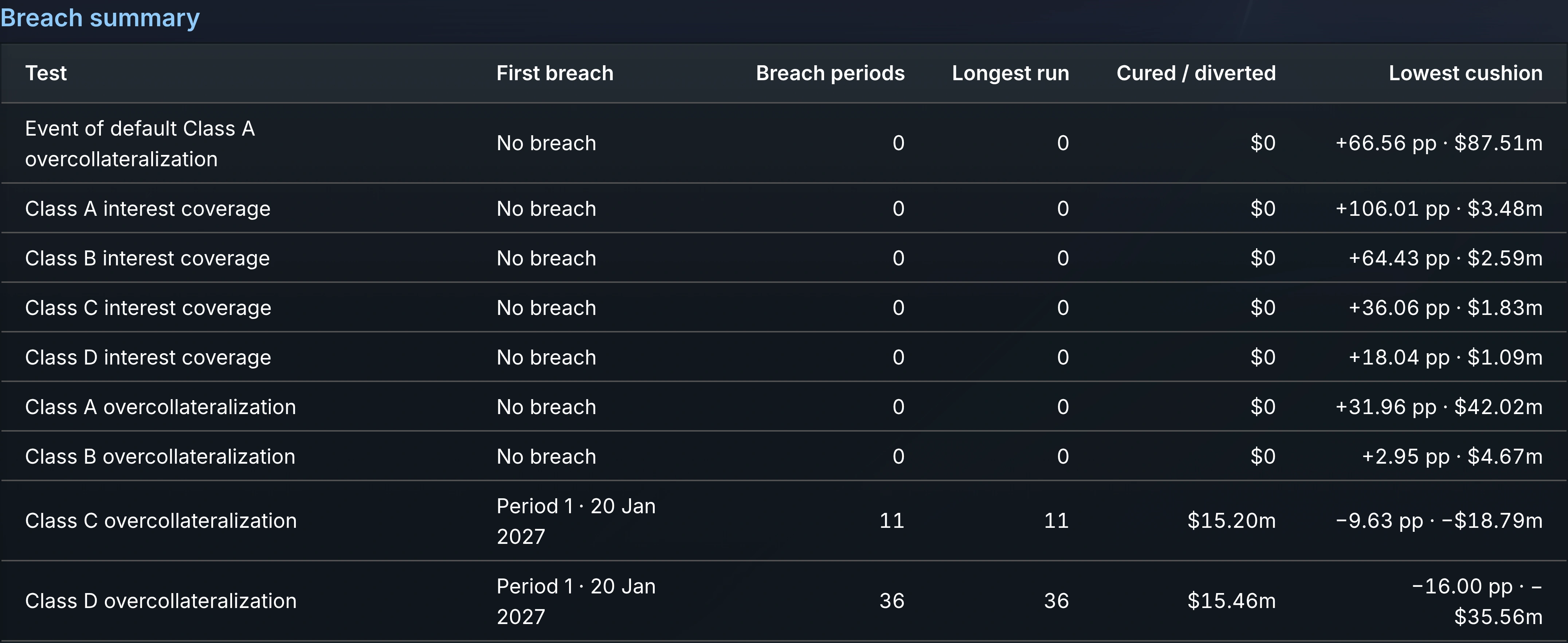
Tests are tracked against their triggers and reports are reconciled against the record, with each break dated.
Dates in your own calendar.
Subscribe to a deal's dates and deadlines from the calendar you already use. The link is private to you and can be replaced at any time.
Every stage, on one record.
A deal is worked through mandate, warehouse, structuring, drafting, pricing and closing, then through reinvestment, amortization, call and redemption. The stage, the people and the work sit on the same record as the documents. A deal that is withdrawn stays on the record.
Start a deal in one step.
Name the deal and its type. DealGraph shows what it will create before it creates anything.
A stage change needs two people.
One person proposes the move to the next stage and another decides it, with the evidence attached. A stage whose gate is not met refuses the move, and the refusal says why.
When the reinvestment period ends.
When a deal's reinvestment period has passed, DealGraph proposes the move to amortization and leaves the decision to the collateral manager.
Know who holds each role.
Each deal has a directory of the parties on it and the people who act for each. Work is assigned to a role, and the directory says who holds it.
A view for each role.
Collateral managers, arrangers, counsel, trustees and others each open a saved timeline built for their work.
Close with fewer surprises.
Terms are mapped as they are drafted. Conflicts between provisions get caught before closing. A diligence question is answered once, with the clause cited.
Know where the deal stands.
Payment and notice dates come straight from the documents. Tests are tracked against their triggers. Holdings, cash and payments are reconciled, and each break is dated.
Prove what happened.
Every number has a source. Every change is recorded, and the audit log is sealed each hour with a published hash, so a rewrite of history is detectable. The full history of the deal sits in one place, not in inboxes.
What you can do
- Start a deal and see what it will create first.
- Move a deal through its stages, with a second person deciding.
- See the next notice due and the clause that requires it.
- Follow each test against its trigger.
- Hand an auditor the full history in one place.
See your own deal as a record.
Bring one indenture. We will show you its parties, waterfall, tests and conflicts, each tied to its clause.