Every step of the waterfall, with its clause beside it.
The model is built from the deal's own priority of payments, not rebuilt by hand in a spreadsheet. Each step carries the clause it came from, and every amount can explain itself.
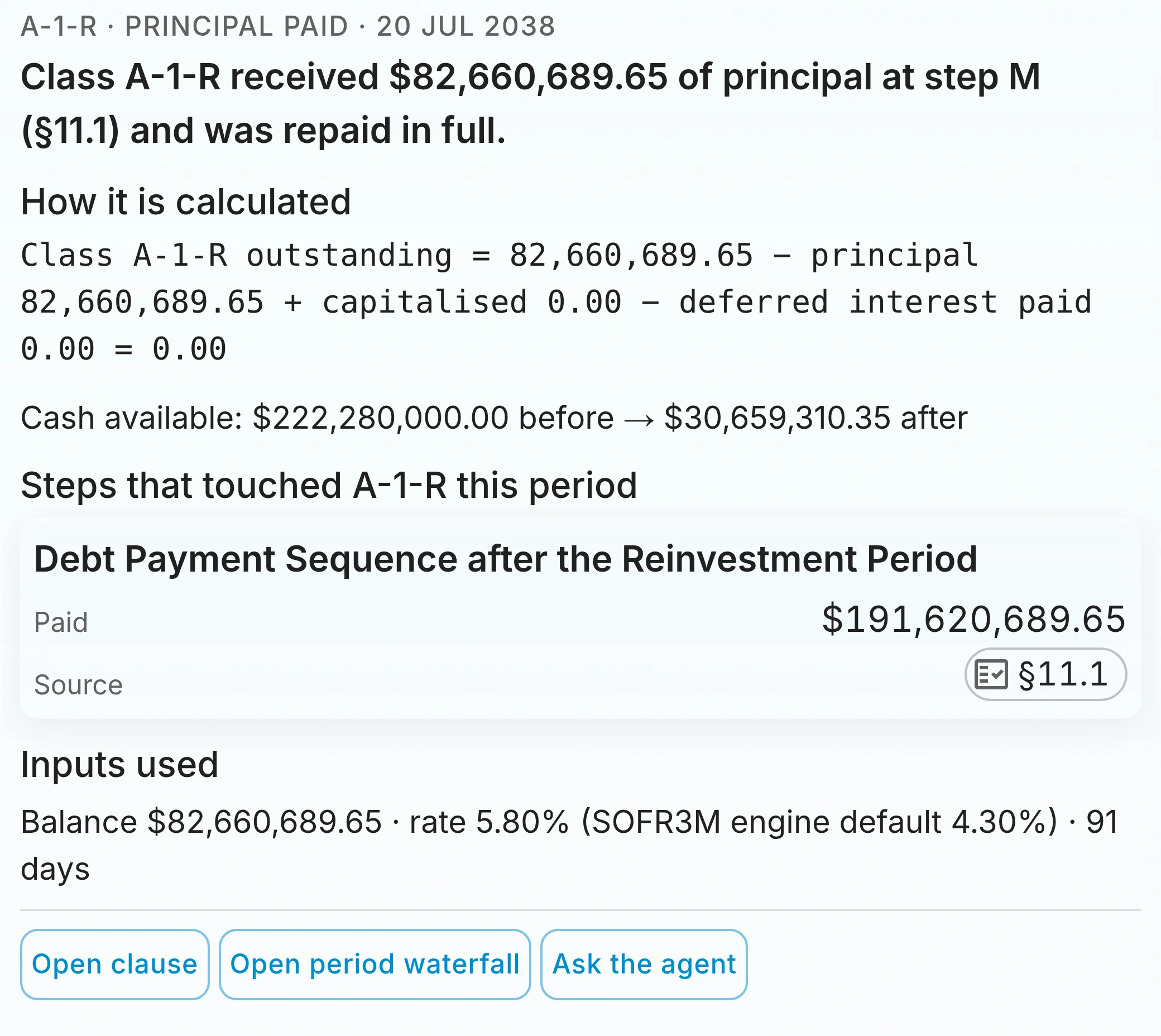
Why a class received what it did.
Click any amount to see the formula, the cash available before and after, the tests applied and the section that governs the step.
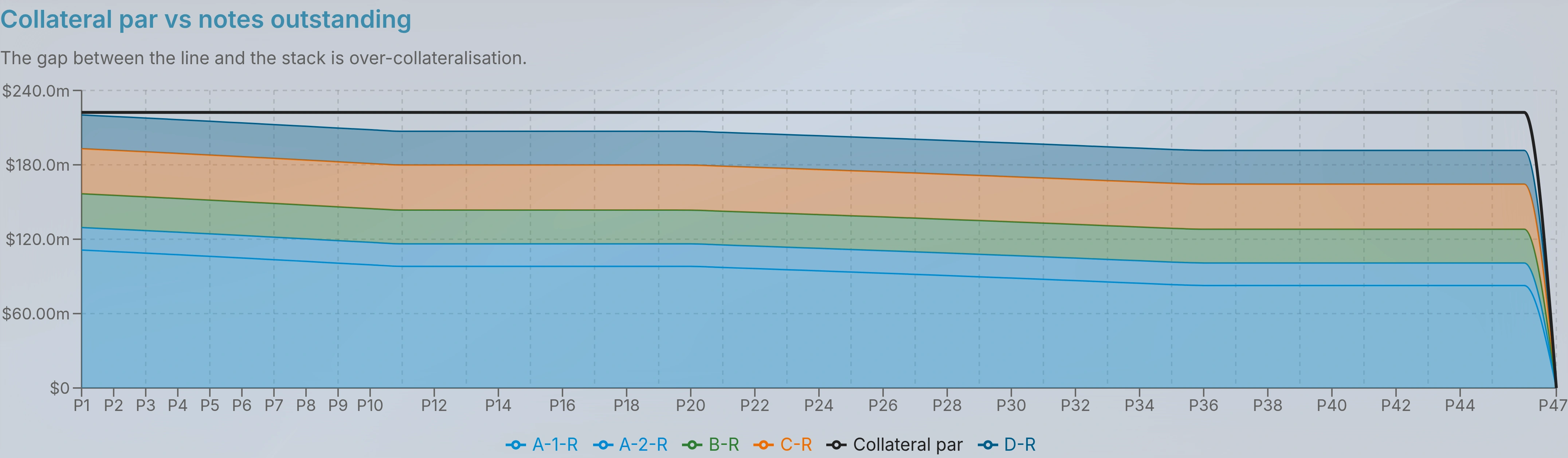
The life of the deal, period by period.
Collateral and each class of notes are projected across every payment date under assumptions you state: defaults, prepayments, recoveries and rates.
Tests run inside the waterfall.
Coverage tests are evaluated on every payment date. When a test fails, the model diverts cash exactly as the priority of payments directs and shows the step where it happened.
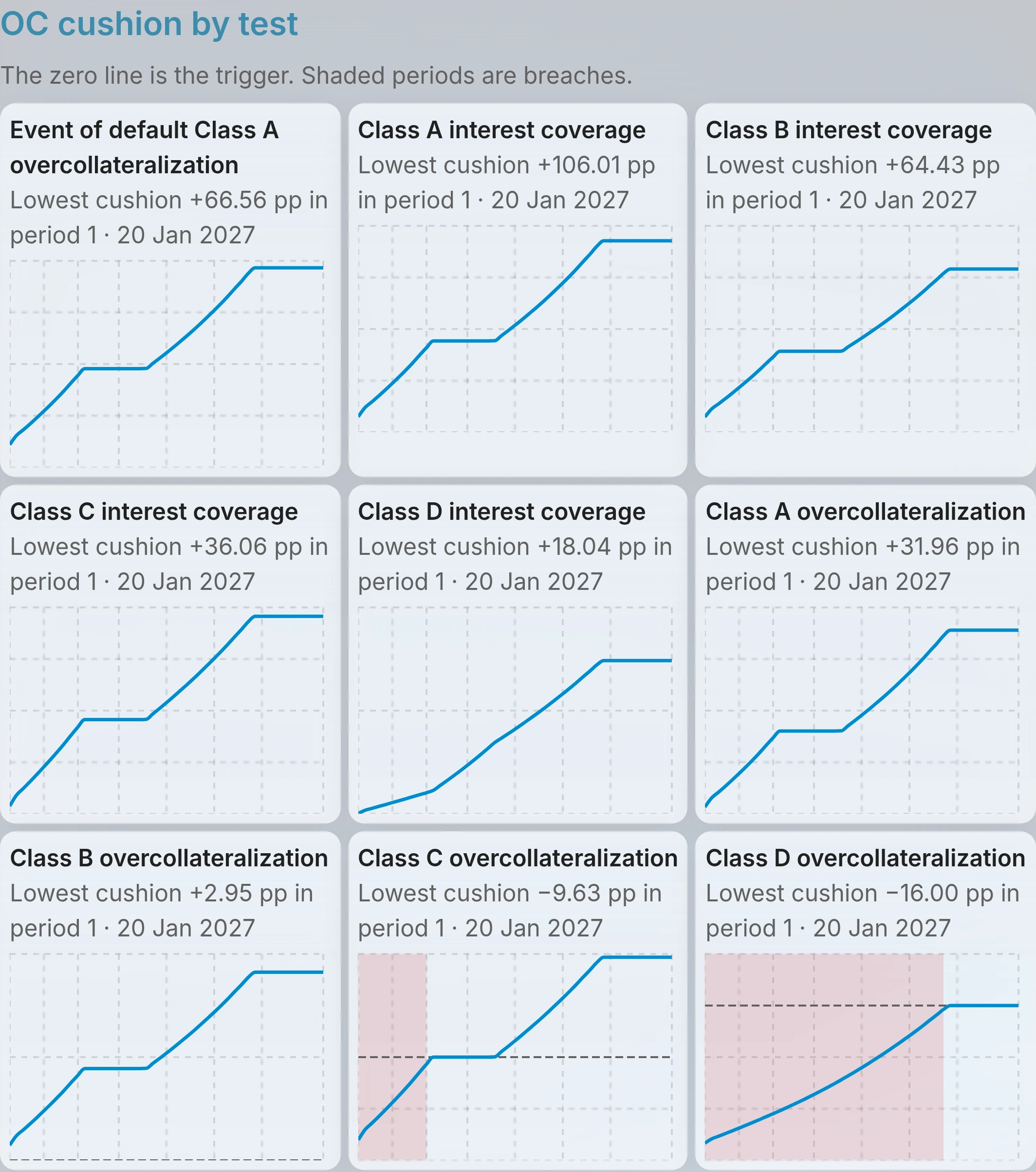
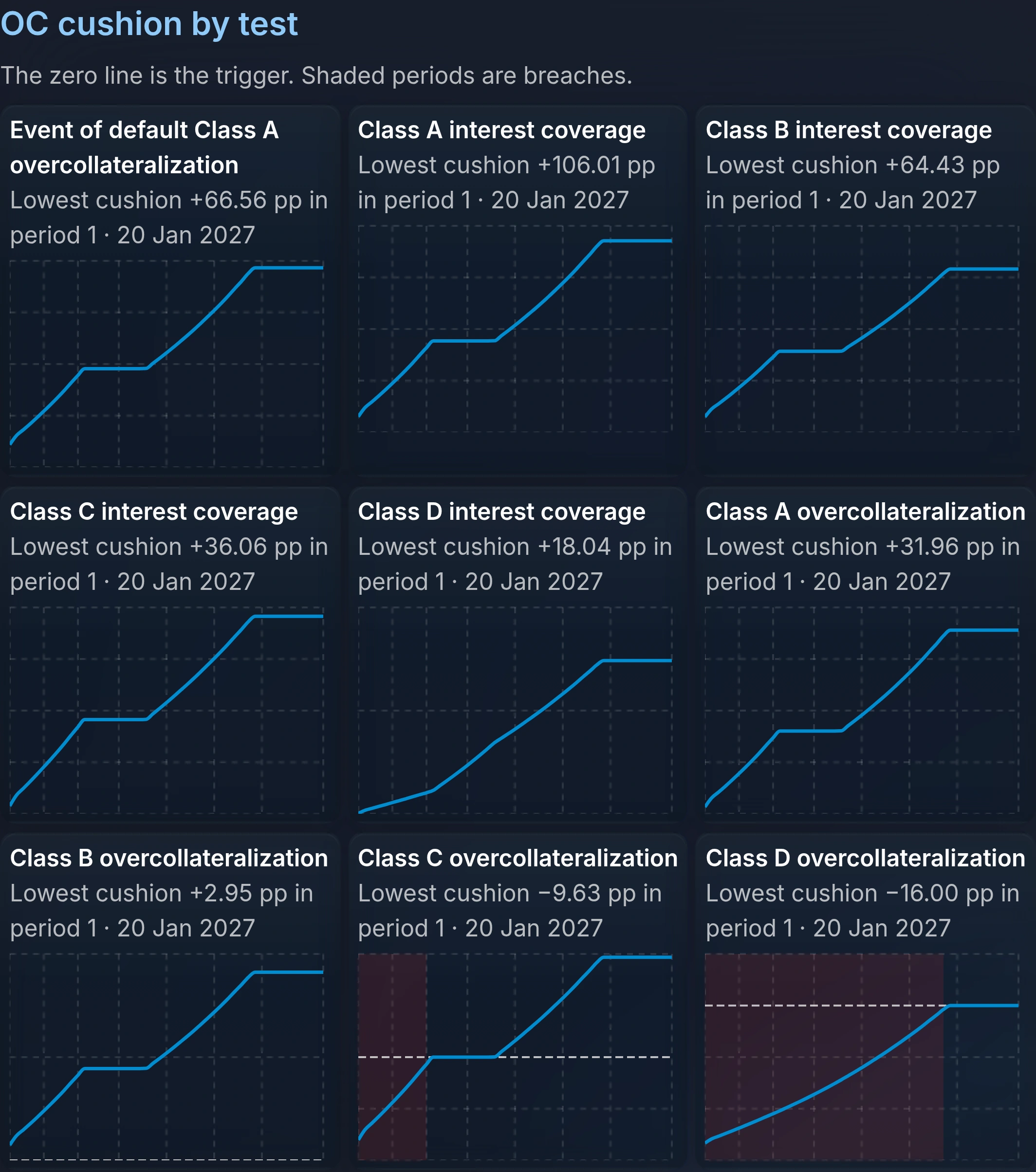
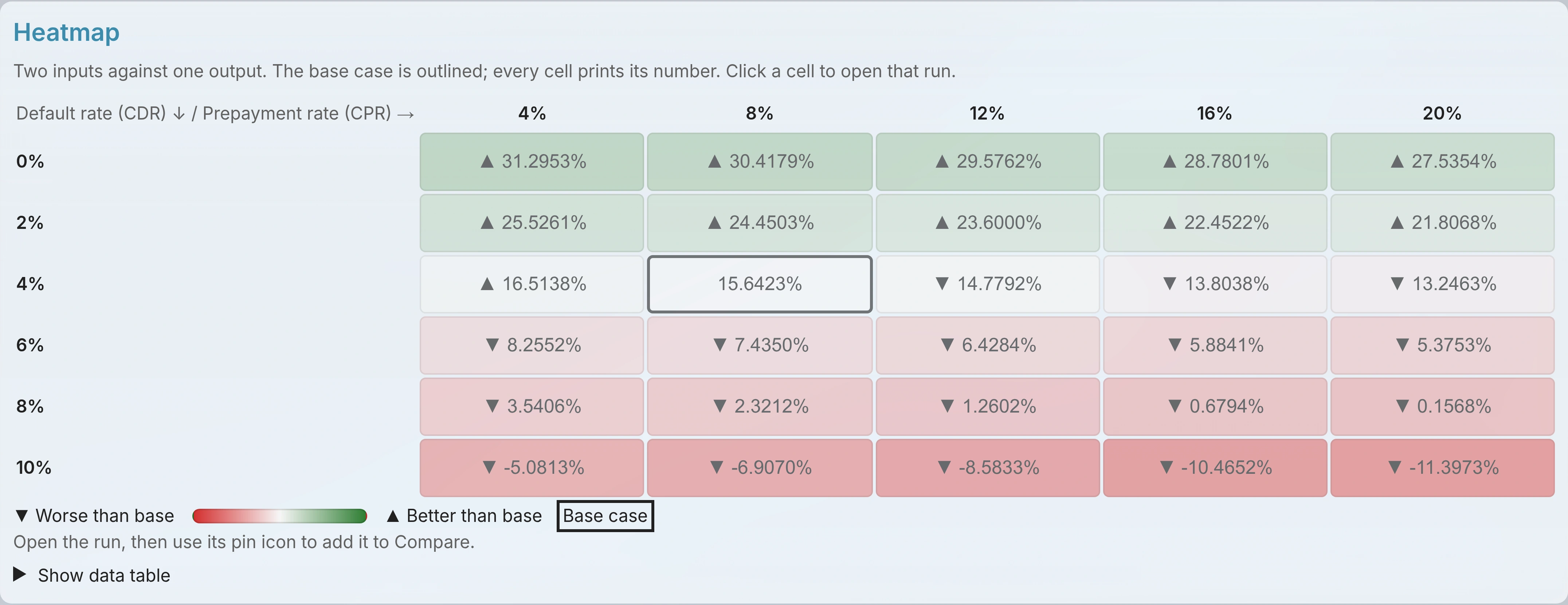
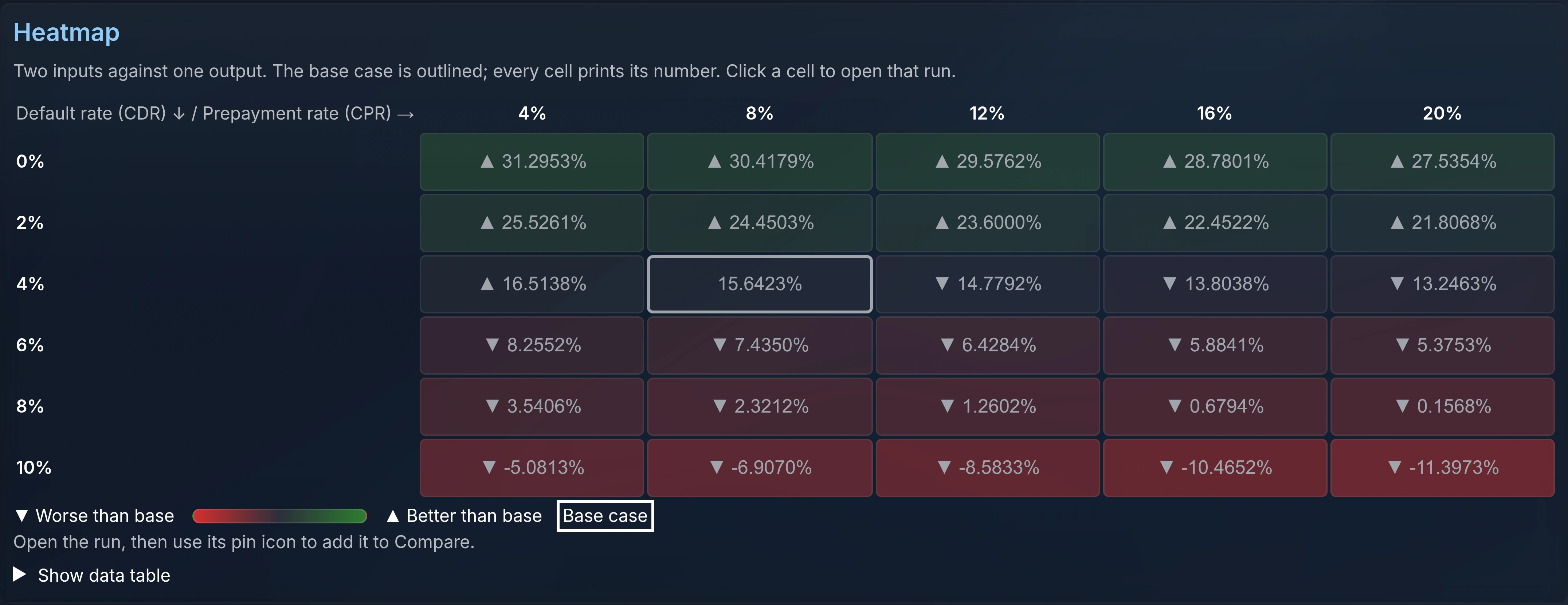
Scenarios and sensitivities.
Run scenarios side by side, see returns for each class and for equity, and find the default rate at which a class first loses principal.
Start from your own loans.
Upload a collateral tape as a CSV or Excel file and map its columns. DealGraph previews the result before anything is saved and names every row it cannot read, with its row number. Nothing is guessed.
See where the pool is concentrated.
When the tape carries an industry column, the collateral card shows the concentration by industry.
The model, beside the trustee.
For every payment date the trustee has reported, each figure the model projected is shown next to the figure the trustee printed, with the difference and a link to the line in the report. Differences are measured against a stated accuracy bar: within it, explained with a cited reason, or outside it. A figure the trustee did not print is shown as not reported.
Replay the past.
Replay a deal's past payment dates through the model and see how closely it reproduces each trustee report.
Interest accounts, as the indenture sets them.
Where a deal holds an interest reserve or a semi-annual interest holdback, the model holds it, draws on it and releases it as the indenture provides, and counts those draws as interest collections in the coverage tests where the indenture says so.
Rates, defaults and dates, as the contract reads.
A loan that converts from fixed to floating follows its reset: the benchmark, the floor and the spread. By default, assumed defaults are spread across every position pro rata. Payment dates roll to a business day as the indenture's own wording says. The first run is the contractual case, with no defaults or prepayments, and stress cases are named presets you choose.
Test a call before it is called.
A call sweep shows the equity return and value at each eligible call date against holding to maturity, and marks the best dates. A refinancing of one class is run as a scenario and shows the change in equity return against the run in focus.
What you can do
- Upload your own collateral tape and run the deal on it.
- Compare the model with each trustee report, figure by figure.
- Compare scenarios with every assumption stated.
- Export to Excel with live formulas and check each figure cell by cell.
- Ask why any number is what it is, and get the clause.
See your own deal as a record.
Bring one indenture. We will show you its parties, waterfall, tests and conflicts, each tied to its clause.